

K-pop Stopped Exporting Idols. Now It's Exporting the Factory.


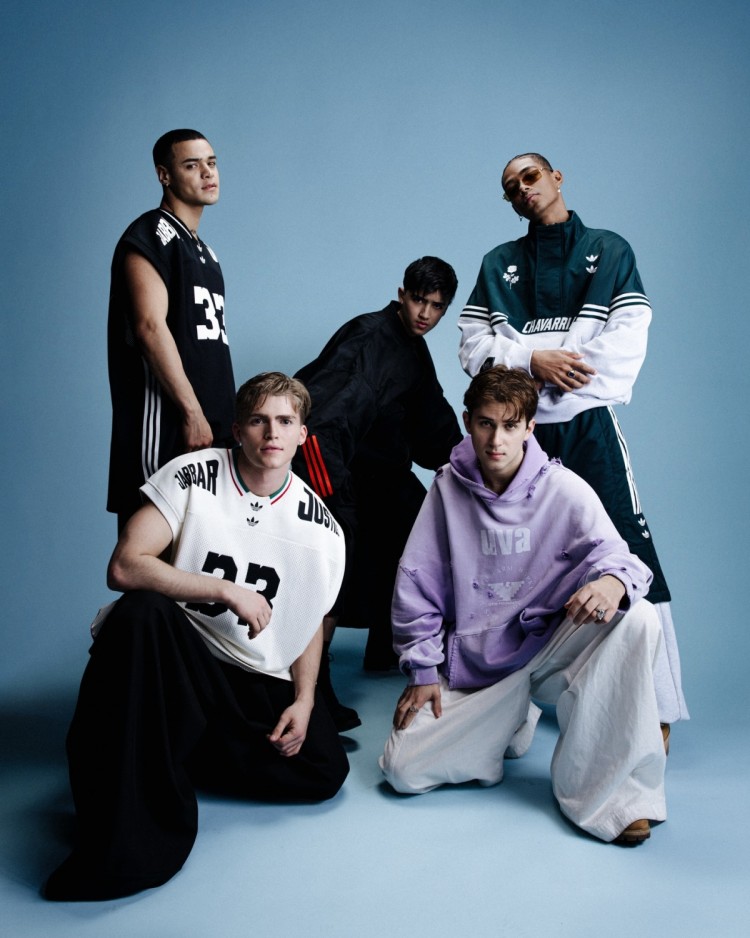
On April 4, five young men from Peru, Brazil, Puerto Rico, Mexico, and the United States landed at Incheon International Airport. They are Santos Bravos, a Latin pop group debuted in Mexico City in October 2025 under HYBE Latin America. This week, they begin three weeks of promotions on Korean music programs - performing in the birthplace of a genre that trained them but that they have never, until now, officially promoted within.
The itinerary is strange enough to be worth examining. A Latin boy group, formed through a reality series on YouTube and Spotify, trained on the K-pop production system in Mexico, flying to Seoul to appear on Inkigayo. HYBE Chairman Bang Si-hyuk calls this "multi-home, multi-genre." What it actually represents is the most significant structural shift in K-pop's 30-year history: the industry has stopped exporting artists and started exporting the assembly line.
For most of K-pop's global expansion, the model was straightforward. Train Korean artists in Seoul, package them with precision choreography and synchronized marketing, then export the product internationally. BTS sold out Wembley Stadium. BLACKPINK headlined Coachella. The "K" in K-pop stood for Korea, both literally and commercially - the product came from one place and traveled outward.
HYBE began quietly dismantling that model in 2023. The logic was commercial: there are markets, particularly in North America and Latin America, where the friction of language and cultural distance limits how far a Korean group can penetrate. The solution was not to remove the friction but to relocate the factory. Instead of sending Korean idols to Los Angeles, build the idol system in Los Angeles. Instead of exporting the product, export the methodology.
KATSEYE was the first proof of concept. The six-member group - formed through a Netflix reality series co-produced with Geffen Records, with members from Switzerland, the Philippines, the US, and Korea - debuted in June 2024, spent 2025 building a genuine fanbase, and walked into the 68th Grammy Awards in February with nominations for Best New Artist and Best Pop Duo. Their second EP Beautiful Chaos peaked at No. 4 on the Billboard 200. Their track "Gabriela" hit No. 31 on the Hot 100. None of the members are from Korea. All of them were trained on the K-pop system.
Santos Bravos extends the experiment southward. The quintet's debut concert at Mexico City's Auditorio Nacional sold 10,000 tickets in record time, with 70,000 more watching via livestream. Their first EP Dual - produced with contributions from Diplo, Bang Si-hyuk himself, and Johnny Goldstein, who has worked with Madonna - blends reggaeton, Brazilian funk, and club music with the precision staging and coordinated performance aesthetic that defines Korean idol production. They were nominated for Rookie of the Year at Latin music's major awards in their debut year.
Now they're on Korean music shows. The direction of travel has reversed.
The strategic logic is clear enough. HYBE posted record 2025 revenue of 2.65 trillion won, approximately $1.99 billion, with KATSEYE surpassing 36 million monthly Spotify listeners and Santos Bravos generating 100 million social media views and 100,000 Weverse subscribers in their first months. Billboard's 2026 Power 100 list recognized Bang Si-hyuk for the fifth time, specifically citing the multi-home strategy's results. HYBE is also now running large-scale auditions in India to form what would be its next regional group - a girl group targeting the world's most populous market.
The financial argument for localization is compelling. A group that is linguistically and culturally native to Latin America can access streaming audiences, live venues, and brand partnerships that a Korean group cannot - not because of talent gaps but because of market friction. Santos Bravos performing at Shakira's Mexican concerts in February was not something &TEAM or ENHYPEN could have done. That specific door requires a specific key.
What HYBE is building is, in effect, a franchise. The core product - the training methodology, the performance precision, the fan engagement infrastructure through Weverse, the synchronized album and merchandise ecosystem - travels to new markets and gets applied to local talent. The "K" becomes a quality mark rather than a country of origin, the way "Hollywood" describes a production standard rather than a geography.
The complications are real and worth naming. KATSEYE's Manon went on hiatus in February, citing health reasons, in circumstances that sparked fan criticism about transparency and the emotional cost of multinational idol programs. The VCHA-to-GIRLSET rebrand, JYP's parallel North American experiment, exposed the growing pains of applying a system designed around a single cultural pipeline to a multinational workforce. Critics have asked, with some justification, whether a group trained in LA on Korean methodology and performing in English constitutes K-pop at all, or whether it's simply global pop wearing a K-pop production badge.
That question is philosophically interesting but commercially beside the point. The market has answered it. KATSEYE sold records, earned Grammy nominations, and built a fanbase that identifies with K-pop culture. Santos Bravos is performing on Korean music shows. The category boundary is already blurring, and the industry is not waiting for a verdict on where K-pop ends and global pop begins.
Bang Si-hyuk told The New Yorker: "We don't apply our methodologies uniformly in each region, but we don't follow the practices of each region blindly, either. We take what works." That's a description of a machine learning process applied to cultural production - iterate, localize, retain the core precision, and expand.
Santos Bravos landing at Incheon this week is the clearest single image of what that process looks like in practice. Five men from five countries, trained in a Mexican city on a system designed in Seoul, flying to Korea to demonstrate that the system works. The factory has moved. The product still bears the mark.


