

Two Words, One Storm: Why G-Dragon's "Lunar New Year" Greeting Has Beijing's Fan Army Furious


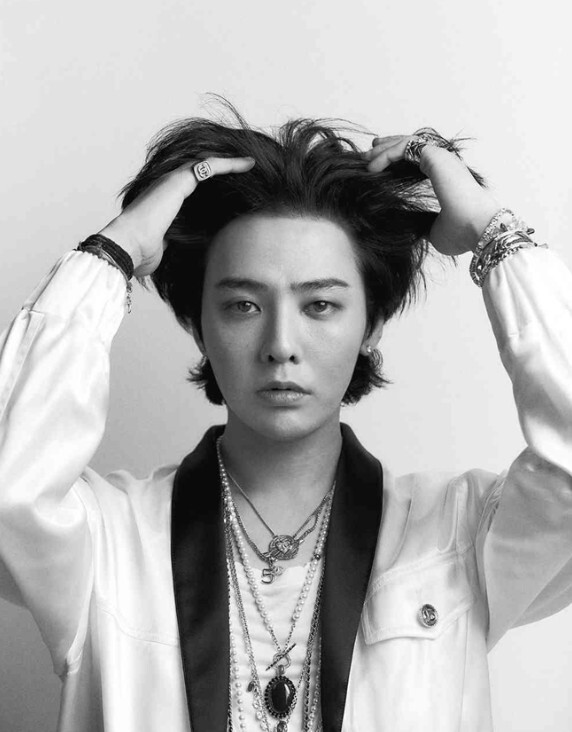
On February 17, at the KRAZY Super Concert in Dubai, G-Dragon did something perfectly ordinary: he greeted his audience with "Lunar New Year." He shouted "Lunar" - the crowd shouted back "New Year" - and he did it three times. That was it.
Chinese nationalist netizens have been seething ever since.
The backlash spread across Chinese social media within hours. Users accused BIGBANG's G-Dragon (Kwon Ji-yong) of deliberate disrespect, with complaints ranging from his wording being "insufficiently respectful" to outright accusations of "insulting China." Hong Kong's South China Morning Post picked it up as a cultural controversy. The term Chinese fans demanded he use instead: "Chinese New Year."
The problem with that demand is straightforward - G-Dragon is Korean. Korea has celebrated Seollal for thousands of years. So has Vietnam, with Tết. So have ethnic communities across Malaysia, Singapore, and Southeast Asia. "Lunar New Year" is not a slight against China. It is the accurate, internationally recognized English term for a holiday shared by hundreds of millions of people across Asia who are not Chinese.
The Contrast Beijing Wanted You to Notice
The backlash was amplified by the presence of Chinese pop idol Cai Xukun on the same stage that night. He greeted the crowd with "Chinese New Year" in English and led fans in Chinese-language well-wishes. Chinese netizens wasted no time circulating side-by-side clips, framing the moment as a loyalty test - one artist "respectful," the other a traitor.
What that framing erases: Cai Xukun is Chinese. G-Dragon is Korean. Both said what was natural to say as who they are. Only one of them is being punished for it.
After the concert, G-Dragon reportedly liked a social media post defending "Lunar New Year" as the correct terminology. Chinese fans treated this as further provocation. His agency said nothing. G-Dragon has said nothing further. He didn't need to.
770,000 Albums and an Implicit Threat
The outrage came loaded with financial context. Chinese fans had purchased approximately 770,000 copies of G-Dragon's album Übermensch - 56 percent of its total global sales - since its release on February 25, 2025. Online commenters cited the number explicitly. The implication was not subtle: this much economic loyalty should buy cultural compliance.
It is the same leverage Beijing-aligned fan networks have applied to global brands, multinational corporations, and foreign governments for years. Companies have rewritten websites. Airlines have changed dropdown menus. Celebrities have issued groveling apologies - all to satisfy the Chinese Communist Party's demand that its preferred terminology and political framing be treated as the global default.
G-Dragon did not apologize. Notably, there has been no coordinated pressure campaign targeting his role as Chanel's global brand ambassador - a sign, perhaps, that the intimidation playbook is losing some of its grip internationally.
A Korean Professor Has Been Fighting This Battle for Years
Professor Seo Kyung-duk of Sungshin Women's University - a counselor at the Presidential Council on Nation Branding - publicly praised G-Dragon's stand. "The groundless and excessive claims of Chinese netizens are growing more intense by the day," he wrote on social media. "The Lunar New Year is not solely a Chinese cultural event, but one celebrated across Asia."
Seo has run campaigns for years to defend "Lunar New Year" as the correct international standard. He has also spent years documenting Beijing's broader cultural appropriation offensive: the claim that Korean kimchi derives from Chinese pao cai, that hanbok originates in China, that Korean folk traditions are simply Chinese culture with different packaging. Earlier this year, he disclosed that Chinese netizens had flooded his accounts with mass harassment, calling South Korea "a cultural thief country" and bombarding him with abuse for a week straight.
The pattern is not accidental. As Korean cultural influence expands globally - K-pop, K-drama, Korean cuisine - Beijing-aligned actors have escalated attempts to absorb Korean identity into a Chinese civilizational narrative, erasing the distinction that undermines the CCP's claim to be the singular source of East Asian culture.
This Is Not About Language
The Chinese Communist Party's campaign to replace "Lunar New Year" with "Chinese New Year" in international usage is not a linguistic preference. It is a political project - the same one that drives Beijing's insistence that Taiwan is a Chinese province, that Tibet has always been part of China, and that the South China Sea belongs to whoever Beijing says it does.
Cultural sovereignty is just another front in that campaign. Every global brand, celebrity, or institution that substitutes "Chinese New Year" for "Lunar New Year" under pressure legitimizes the claim that China owns the holiday - and, by extension, that Korean Seollal and Vietnamese Tết are lesser traditions derived from Chinese origins rather than distinct cultural inheritances in their own right.
G-Dragon said two words in Dubai. To Beijing's nationalist apparatus, those two words were a threat - because they told the truth.
G-Dragon (Kwon Ji-yong) is a member of BIGBANG and a global brand ambassador for Chanel. His third studio album Übermensch was released on February 25, 2025. The KRAZY Super Concert on February 17, 2026 was his first official performance in the Middle East.


